
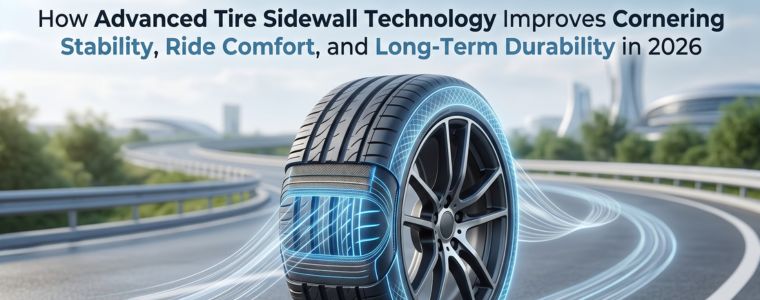
Tire technology has evolved significantly in recent years, with manufacturers focusing not only on tread design and rubber compounds but also on the structure of the tire sidewall. The sidewall is an essential part of a tire because it helps absorb road impacts, support vehicle weight, maintain tire shape, and influence steering response.
In 2026, advanced sidewall technology is helping manufacturers create tires that deliver a better balance of cornering stability, ride comfort, handling, and long-term durability. From reinforced construction to optimized materials and flexible sidewall designs, these developments are changing how modern tires respond to different road conditions.
For drivers searching for the best tires for car applications, understanding sidewall construction can make it easier to select tires that match their vehicle and driving requirements. Similarly, drivers who frequently travel on rough roads or challenging terrain may benefit from understanding the design features available in modern off road tires.
What Is the Tire Sidewall?
The tire sidewall is the section between the tread and the wheel rim. Although it does not directly contact the road like the tread, it performs several important functions.
The sidewall helps:
- Support vehicle weight
- Absorb road impacts
- Maintain tire structure
- Protect internal components
- Influence steering response
- Provide information such as tire size and specifications
Its flexibility and strength have a direct influence on how the vehicle feels on the road.
Why Sidewall Technology Matters
Tires must balance flexibility and stiffness. A sidewall that is too flexible may produce excessive movement during cornering, while an overly stiff design can create a harsher ride.
Modern tire manufacturers therefore engineer sidewalls to provide an appropriate combination of:
- Structural strength
- Controlled flexibility
- Impact resistance
- Steering stability
- Ride comfort
- Durability
Advanced materials and construction methods help achieve this balance.
How Sidewalls Improve Cornering Stability
During cornering, lateral forces place significant stress on the tires. A well-engineered sidewall helps maintain the tire’s shape and supports predictable contact with the road.
Advanced sidewall designs can help provide:
- More precise steering response
- Improved cornering stability
- Better directional control
- Reduced sidewall deformation
- More consistent handling
This becomes especially important for drivers who regularly travel at highway speeds or encounter winding roads.
The Role of Sidewall Stiffness
Sidewall stiffness influences how quickly a tire responds to steering inputs. A controlled level of stiffness can improve handling by limiting excessive sidewall flex during cornering.
However, manufacturers must balance stiffness with comfort because excessive rigidity can transmit more road impacts into the vehicle cabin.
Modern designs therefore focus on creating sidewalls that are strong when needed while remaining flexible enough to absorb everyday road imperfections.
Improving Ride Comfort
Sidewalls also function as part of the vehicle’s impact absorption system. When a tire encounters:
- Potholes
- Road joints
- Uneven pavement
- Gravel
- Speed bumps
The sidewall flexes and helps absorb some of the impact. Advanced sidewall materials and construction techniques can improve this process, contributing to a smoother and more comfortable ride.
Sidewall Technology and Long-Term Durability
Tire durability depends on more than tread depth. The sidewall must withstand repeated flexing, temperature changes, road impacts, and environmental exposure.
Advanced sidewall construction can help improve resistance to:
- Impact damage
- Excessive flexing
- Heat-related stress
- Abrasion
- Structural fatigue
This can contribute to longer service life when the tires are properly maintained and used within their intended application.
Choosing the Best Tires for Car Applications
Drivers searching for the best tires for car use should consider more than tread pattern or price. Important factors include:
- Tire size
- Load rating
- Speed rating
- Sidewall construction
- Weather conditions
- Driving style
- Road quality
- Expected mileage
A tire designed for highway comfort may have different sidewall characteristics from a performance-oriented tire.
The best option is ultimately the tire that matches the vehicle and the driver’s actual needs.
Sidewall Technology in Off-Road Tires
Drivers who regularly travel on rough terrain have different tire requirements. Modern off road tires often feature reinforced sidewalls designed to withstand demanding environments.
These tires may encounter:
- Rocks
- Gravel
- Mud
- Sand
- Sharp terrain
- Uneven surfaces
Reinforced sidewalls can provide additional protection against cuts, punctures, and impact damage.
Balancing Off-Road Strength With Comfort
Historically, heavily reinforced off-road tires could provide a harsher driving experience on paved roads.
Modern tire engineering aims to reduce this compromise. Manufacturers are developing sidewall structures that provide durability for challenging terrain while maintaining reasonable flexibility and road comfort.
This makes modern all-terrain and off-road-oriented tires increasingly versatile.
Sidewall Design and Fuel Efficiency
Sidewall construction can also influence rolling resistance. Excessive deformation requires additional energy as the tire rotates. Manufacturers therefore work to optimize sidewall flexibility to reduce unnecessary energy loss while maintaining sufficient road contact.
Improved rolling efficiency can potentially support:
- Better fuel economy
- Lower energy consumption
- Reduced tire heat generation
- Improved driving efficiency
Electric vehicles can also benefit from carefully engineered tire construction because rolling resistance directly affects energy consumption and driving range.
Importance of Proper Tire Pressure
Even advanced sidewall technology cannot compensate for incorrect inflation pressure. Underinflation can increase sidewall flexing and heat buildup, while overinflation can affect contact with the road and ride comfort.
Drivers should regularly check tire pressure and follow the vehicle manufacturer’s recommended specifications. Proper inflation supports:
- Handling
- Tire longevity
- Fuel efficiency
- Ride comfort
- Safety
Future of Tire Sidewall Technology
Tire manufacturers are increasingly exploring smart materials and connected tire technologies. Future developments may include:
- Intelligent sidewall sensors
- Real-time pressure monitoring
- Temperature monitoring
- Advanced reinforcement materials
- Self-monitoring tire systems
- Predictive maintenance technology
These innovations could allow drivers and vehicle systems to identify developing tire problems earlier.
Final Thoughts
Advanced tire sidewall technology is playing an increasingly important role in improving cornering stability, ride comfort, and long-term durability in 2026. By carefully balancing stiffness, flexibility, impact resistance, and structural strength, modern tire manufacturers can create products that perform effectively across a wide range of driving conditions.
Drivers looking for the best tires for car applications should consider sidewall construction alongside tire size, load rating, weather performance, tread design, and driving conditions. Those who regularly drive on challenging terrain should also evaluate the reinforced construction available in modern off road tires.
Ultimately, choosing the right tire and maintaining proper inflation, alignment, rotation, and inspection practices can help drivers achieve better handling, greater comfort, and longer-lasting tire performance.
