
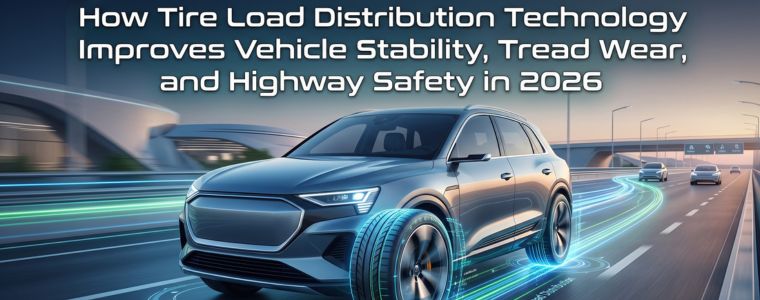
Tires are the only components of a vehicle that remain continuously connected to the road, making their ability to carry and distribute vehicle weight essential for safe and predictable driving. Modern vehicles are becoming heavier because of advanced safety systems, larger batteries in electric vehicles, additional electronics, and increasingly sophisticated cabin features.
As a result, tire manufacturers are focusing more heavily on load distribution technology in 2026. Modern tire construction, tread design, sidewall engineering, and contact-patch optimization can help distribute vehicle weight more consistently across the road surface.
For drivers searching for the best tires for car, understanding load distribution can make tire selection more informed. Similarly, all season tires can benefit from carefully engineered load management, helping provide balanced performance across changing road and weather conditions.
What Is Tire Load Distribution?
Tire load distribution refers to how vehicle weight is transferred through the suspension, wheels, and tires to the road surface.
Each tire carries a portion of the vehicle’s total weight. However, the load is not always distributed equally.
Factors affecting tire loading include:
- Vehicle weight
- Passenger load
- Cargo
- Acceleration
- Braking
- Cornering
- Road surface
- Tire pressure
- Suspension geometry
Proper load distribution helps the tires maintain more consistent contact with the road.
Why Load Distribution Matters
Uneven loading can affect several aspects of vehicle performance. It may influence:
- Steering response
- Braking stability
- Cornering behavior
- Tread wear
- Ride comfort
- Wet-road traction
- Highway stability
Modern tire designs attempt to manage these forces through advanced materials and internal construction.
How Tire Construction Supports Load Management
A tire is made up of multiple engineered components. These may include:
- Tread compound
- Steel belts
- Textile reinforcement
- Sidewalls
- Bead assemblies
- Inner liner
Each component contributes to how the tire supports vehicle weight and responds to road forces.
The interaction between these components helps maintain the tire’s intended shape under load.
Contact Patch and Weight Distribution
The contact patch is the portion of the tire tread physically touching the road. A well-maintained tire should maintain a reasonably consistent contact patch under normal operating conditions.
Uneven loading can alter how pressure is distributed across this area.
If certain areas of the tread carry excessive pressure, they may experience faster wear.
Impact on Tread Wear
Tire load distribution has a direct relationship with tread wear. Improper loading or incorrect tire pressure can contribute to uneven wear patterns such as:
- Center wear
- Shoulder wear
- Feathering
- Cupping
Correct inflation and proper wheel alignment are essential for minimizing these issues. Even advanced tire technology cannot compensate for consistently incorrect tire pressure or damaged suspension components.
Highway Stability
Highway driving places unique demands on tires. At higher speeds, tires must respond consistently to:
- Steering inputs
- Lane changes
- Crosswinds
- Road imperfections
- Braking forces
Balanced load distribution can help maintain predictable contact with the road.
Modern tire designs use reinforced structures and optimized tread patterns to support stability under these conditions.
Tire Load and Cornering
During cornering, vehicle weight shifts toward the outside tires. This increases the load on those tires while reducing the load on the inside tires.
Tire construction must accommodate these changing forces without excessive deformation. Advanced sidewall and belt designs can help maintain stability during cornering.
Importance of Tire Pressure
Correct tire pressure is one of the most important factors affecting load distribution. Underinflated tires can develop greater sidewall flex and altered contact-patch behavior.
Overinflated tires can reduce the intended contact area and affect ride characteristics. Drivers should follow the vehicle manufacturer’s recommended tire pressure rather than relying solely on the maximum pressure printed on the tire sidewall.
All Season Tires and Load Management
Modern all season tires are designed to provide balanced performance across a broad range of everyday conditions.
They may incorporate:
- Optimized tread patterns
- Reinforced internal structures
- Advanced rubber compounds
- Multiple traction features
- Stiffness optimization
Their design aims to balance dry-road handling, wet traction, comfort, and seasonal usability.
However, drivers should always choose tires according to their local climate and driving requirements.
Choosing the Best Tires for Car
When searching for the best tires for car, drivers should consider more than brand or price.
Important factors include:
- Correct tire size
- Load index
- Speed rating
- Vehicle type
- Driving conditions
- Climate
- Expected mileage
- Road conditions
A tire that performs well on one vehicle may not be the ideal choice for another.
Load Index and Vehicle Safety
The tire load index indicates the maximum load a tire is designed to support under specified conditions. Choosing a tire with an appropriate load rating is essential.
Using tires with an insufficient load capacity can create safety and durability concerns, particularly when the vehicle regularly carries heavy passengers or cargo.
Drivers should follow the vehicle manufacturer’s recommended specifications.
Effect of Suspension Components
Tire load distribution is not controlled by tires alone. Suspension components such as:
- Springs
- Shock absorbers
- Struts
- Control arms
- Bushings
also influence how vehicle weight is distributed.
Worn suspension components can cause uneven tire loading and accelerate tread wear.
Wheel Alignment and Load Distribution
Correct alignment helps ensure that tires contact the road at the intended angles.
Poor alignment can cause:
- Uneven tread wear
- Steering pull
- Reduced handling stability
- Increased rolling resistance
Wheel alignment should be checked when uneven wear or handling problems appear.
Tire Technology for Electric Vehicles
Electric vehicles have introduced additional challenges for tire manufacturers. EVs can be heavier because of their battery packs and may produce immediate torque during acceleration.
Tires designed for EV applications may therefore use specialized:
- Load ratings
- Reinforcement structures
- Compounds
- Noise-reduction technology
Proper load capacity becomes especially important for heavier vehicles.
Smart Tire Monitoring
Modern vehicles increasingly use tire pressure monitoring systems. Advanced monitoring can alert drivers when tire pressure falls outside recommended levels.
Maintaining proper pressure supports:
- Consistent contact
- Better tread wear
- Stable handling
- Improved efficiency
Future systems may provide more detailed information about tire temperature, load, and operating conditions.
Future of Tire Load Distribution Technology
Tire technology is expected to become increasingly intelligent. Future developments may include:
- Sensor-integrated tires
- Real-time load monitoring
- Adaptive tire structures
- AI-assisted tire diagnostics
- Advanced contact-patch analysis
- Vehicle-to-tire communication
These technologies could provide drivers with more information about tire condition and road performance.
Final Thoughts
Tire load distribution technology is becoming increasingly important as vehicles become heavier, faster, and more technologically advanced in 2026. Properly engineered tire structures can help manage changing loads during acceleration, braking, cornering, and highway driving.
For drivers searching for the best tires for car, factors such as load index, tire size, speed rating, vehicle weight, driving conditions, and climate should all be considered. Modern all season tires can provide a versatile solution for many drivers, provided they meet the vehicle’s required specifications and are appropriate for local conditions.
Ultimately, tire technology works best when combined with correct inflation, wheel alignment, healthy suspension components, and regular inspections. Maintaining these elements can help improve vehicle stability, promote more even tread wear, and support safer highway driving throughout the tire’s service life.
