
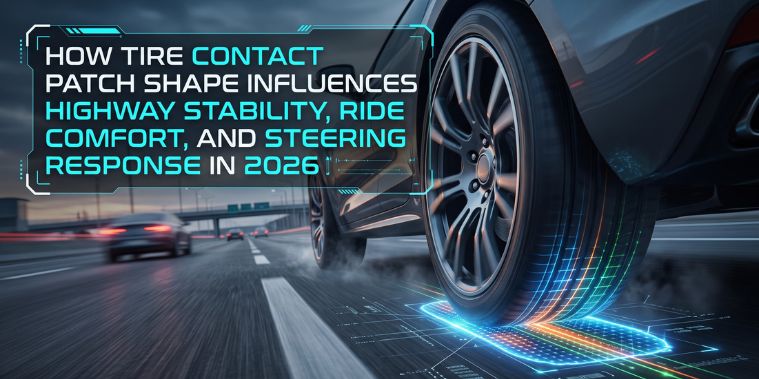
Highway driving requires a balanced combination of stability, steering control, comfort, and predictable handling. One factor that influences these characteristics is the shape and behavior of the tire contact patch-the area where the tire meets the road. Drivers researching the best tires for car applications should consider how contact patch characteristics affect everyday performance. Similarly, all season tires are designed to provide a practical balance across different road and weather conditions, making contact patch behavior an important consideration when selecting tires in 2026.
What Is a Tire Contact Patch?
The tire contact patch is the portion of the tread that physically touches the road surface while a vehicle is moving. Although it may appear relatively simple, its shape can change depending on several factors, including:
- Tire pressure
- Vehicle weight
- Tire construction
- Tread design
- Road surface
- Cornering forces
- Braking forces
- Tire temperature
The contact patch continuously changes as the tire rolls, accelerates, brakes, and turns.
Why Contact Patch Shape Matters on Highways
Highway driving often involves sustained speeds, lane changes, curves, braking, and long periods of straight-line travel. A well-balanced contact patch can contribute to:
- Stable straight-line tracking
- Predictable steering response
- Consistent road contact
- Even tread wear
- Comfortable handling
When the contact patch is unevenly loaded or affected by incorrect tire pressure, drivers may notice changes in steering feel and ride quality.
Contact Patch and Highway Stability
Straight-line stability is especially important during long highway journeys. A tire with an appropriate contact patch can maintain consistent contact with the road as the vehicle travels over changing pavement surfaces.
Factors such as tire construction, inflation pressure, and tread design can influence how evenly forces are distributed across the contact area. When the tire is correctly inflated and properly matched to the vehicle, the contact patch can support more predictable highway behavior.
How Contact Patch Shape Affects Steering Response
Steering response depends partly on how quickly the tire reacts to steering inputs. When a driver turns the steering wheel, forces are transferred through the tire before the vehicle changes direction.
Contact patch characteristics can influence:
- Initial steering response
- Cornering feel
- Directional stability
- Steering precision
- Driver confidence
A tire designed for balanced road performance can provide predictable feedback without making the vehicle feel unnecessarily harsh.
The Role of Tire Pressure
Tire pressure is one of the most important factors affecting contact patch shape. Underinflation can cause the tire to flex more and alter how the tread sits against the road. Overinflation can reduce the portion of the tread making effective contact with the surface.
Both conditions can affect:
- Handling
- Tread wear
- Ride comfort
- Braking baehvior
- Fuel efficiency
Drivers should always follow the vehicle manufacturer’s recommended cold tire pressure rather than relying on the maximum pressure printed on the tire sidewall.
Contact Patch and Ride Comfort
Highway comfort depends on more than suspension design. Tires also help absorb small road imperfections before vibrations reach the vehicle cabin.
The tire’s:
- Sidewall construction
- Tread design
- Internal structure
- Inflation pressure
Can influence how it responds to bumps and pavement irregularities. A well-balanced tire can help provide a smoother ride while maintaining sufficient steering control.
Why All Season Tires Require a Balanced Design
All season tires are designed for drivers who want versatile performance across a range of typical road conditions. Their design generally aims to balance:
- Dry-road handling
- Wet-road traction
- Ride comfort
- Tread life
- Light winter capability
Because they serve multiple driving conditions, their contact patch behavior must work effectively across different temperatures and road surfaces. However, all-season tires are not a universal replacement for dedicated winter tires in severe winter conditions.
Contact Patch and Tread Wear
The shape and pressure distribution of the contact patch can also influence tread wear. If pressure or alignment is incorrect, certain portions of the tread may experience greater loading.
Potential results include:
- Center wear
- Shoulder wear
- Uneven tread patterns
- Reduced tire life
Regular tire inspections and correct inflation can help maintain more even contact across the tread.
Choosing the Best Tires for Highway Driving
Drivers searching for the best tires for car use should consider their actual driving environment rather than choosing based solely on brand or price. Important factors include:
- Vehicle type
- Recommended tire size
- Highway mileage
- Local weather
- Load requirements
- Ride comfort preferences
- Wet-road conditions
- Expected tread life
A tire that works well for one vehicle or driving style may not provide the same results for another.
Contact Patch During Cornering
Cornering changes the forces acting on the tire. As the vehicle turns, weight shifts toward the outside tires. The contact patch can change shape as the tire experiences increased lateral forces.
A suitable tire design can help maintain predictable contact and steering behavior during highway curves. Proper wheel alignment is also essential because incorrect alignment can change how the tire meets the road.
How Road Conditions Influence Contact Patch Behavior
The road itself can influence tire performance. Highways may contain:
- Smooth asphalt
- Rough pavement
- Grooves
- Expansion joints
- Standing water
- Uneven surfaces
Tire construction and tread design determine how effectively the tire responds to these conditions. Drivers should select tires according to the environments in which their vehicles are primarily operated.
Maintenance Helps Preserve Contact Performance
Even a high-quality tire can perform poorly if it is not maintained correctly. Drivers should regularly:
- Check tire pressure when tires are cold.
- Inspect tread depth.
- Look for uneven wear.
- Check for visible damage.
- Maintain proper wheel alignment.
- Rotate tires according to manufacturer recommendations.
- Replace tires when they reach the appropriate wear or age limits.
These practices help maintain consistent tire-road contact.
Final Thoughts
Tire contact patch shape plays an important role in highway stability, ride comfort, steering response, and tread wear. Although drivers may not see the contact patch while driving, its behavior is influenced by tire pressure, construction, tread design, vehicle loading, alignment, and road conditions.
When evaluating the best tires for car applications, understanding these factors can help drivers make more informed decisions. All season tires can offer a versatile solution for drivers who regularly encounter changing everyday conditions, provided their specifications match the vehicle and local climate.
In 2026, selecting the right tire should involve more than comparing price or appearance. Matching tire characteristics with vehicle requirements, highway driving habits, maintenance practices, and expected road conditions can contribute to safer, more comfortable, and more predictable driving.
