
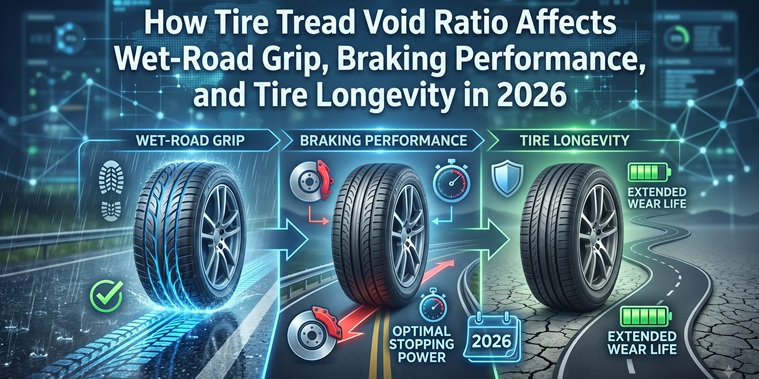
Tire tread design plays an important role in how a vehicle behaves on wet and dry roads. Among the many factors that influence tire performance, tread void ratio can affect water evacuation, road contact, braking response, and tread wear. Drivers comparing the best tires for car applications should understand how tread design matches their driving conditions, while all season tires use carefully engineered tread patterns to provide balanced performance across a range of weather conditions. In 2026, understanding tread void ratio can help drivers make more informed tire purchasing decisions.
What Is Tire Tread Void Ratio?
Tread void ratio refers to the percentage of the tread surface occupied by grooves, channels, and other open spaces rather than solid rubber. A tire with a higher void ratio has more open space between its tread blocks. A tire with a lower void ratio has more rubber in contact with the road.
The ideal ratio depends on the tire’s intended purpose. Highway tires, performance tires, winter tires, and off-road tires can have significantly different tread designs because they operate under different road conditions.
How Void Ratio Affects Wet-Road Grip
Water on the road can create a barrier between the tire and pavement. If the tread cannot move water away efficiently, the risk of hydroplaning can increase. Tread grooves provide channels through which water can move away from the contact area.
A carefully designed void ratio can help:
- Improve water evacuation
- Maintain pavement contact
- Reduce hydroplaning risk
- Support wet-road traction
- Improve steering confidence
However, a higher void ratio does not automatically mean better wet performance. Groove direction, depth, width, tread-block shape, and compound characteristics also influence water management.
The Connection Between Tread Design and Braking
Braking performance depends heavily on how effectively the tire maintains contact with the road. On wet pavement, effective tread channels can help remove water and allow the tire’s rubber compound and tread blocks to interact with the road surface.
A balanced tread design can contribute to:
- More predictable braking
- Better wet-road control
- Improved steering response
- Greater stability during emergency stops
When selecting the best tires for car use, drivers should therefore consider the tire’s complete tread design rather than focusing on one specification alone.
Why Too Much Void Can Reduce Road Contact
Although open tread areas are useful for water and debris evacuation, excessive void space can reduce the amount of rubber contacting the pavement.
This may affect:
- Dry-road grip
- Cornering stability
- Braking feel
- Steering precision
- Highway handling
For everyday passenger vehicles, manufacturers generally aim to balance open grooves with sufficient tread contact area. The appropriate balance depends on the tire’s intended operating environment.
How Void Ratio Influences Tire Longevity
Tread longevity is affected by several factors, including rubber compound, vehicle alignment, inflation pressure, driving habits, road surfaces, and tread design. Tread blocks need sufficient structural support to resist excessive movement during acceleration, braking, and cornering.
If tread blocks flex excessively, heat generation and irregular wear can increase. A properly engineered tread pattern can help distribute forces across the tire more evenly, supporting consistent wear over its service life.
Why All Season Tires Require Balanced Tread Design
All season tires are designed to provide versatile performance across multiple common driving conditions.
They typically need to balance:
- Dry-road handling
- Wet-road traction
- Light winter capability
- Ride comfort
- Noise control
- Tread durability
Because they are intended for year-round use in suitable climates, their tread patterns cannot be optimized exclusively for one condition.
Manufacturers therefore carefully design groove arrangements and tread-block proportions to create a practical compromise between traction, stability, and longevity.
Tread Void Ratio and Hydroplaning Resistance
Hydroplaning occurs when a tire loses sufficient contact with the pavement because of water buildup. Tread voids help create pathways for water to escape from beneath the tire.
Several design elements can influence hydroplaning resistance, including:
- Main circumferential grooves
- Lateral grooves
- Tread depth
- Groove geometry
- Tread block arrangement
- Tire width
- Vehicle speed
Drivers should remember that even advanced tread designs cannot completely eliminate hydroplaning. Speed, water depth, tire condition, and inflation pressure remain important factors.
How Driving Conditions Affect the Ideal Tread
There is no single tread void ratio that is perfect for every driver. For example:
- Wet climates: Tires with effective water evacuation features can be beneficial.
- Highway driving: Drivers may prioritize stability, comfort, and even tread wear.
- Off-road use: More open tread patterns can help clear mud, dirt, and loose surfaces.
- Urban driving: A balanced design can provide a combination of wet grip, braking performance, comfort, and durability.
This is why tire selection should be based on the vehicle and typical driving environment.
Why Tread Depth Still Matters
Void ratio should not be confused with tread depth. A tire can have an effective tread pattern but still lose performance as the tread wears down.
Reduced tread depth can decrease the available groove volume for water evacuation, particularly during heavy rain. Regularly checking tread condition is therefore essential for maintaining wet-road performance.
Maintaining Tire Performance
Drivers can help preserve tread performance through proper tire maintenance. Important practices include:
- Maintaining recommended tire pressure
- Checking tread depth regularly
- Rotating tires according to manufacturer recommendations
- Keeping wheel alignment properly adjusted
- Inspecting for uneven wear
- Avoiding prolonged driving on damaged tires
Proper maintenance can help the tread perform as designed and support more consistent tire longevity.
Choosing the Right Tire in 2026
When searching for the best tires for car applications, drivers should consider more than price or brand recognition.
Important factors include:
- Climate
- Annual mileage
- Driving style
- Road conditions
- Wet-weather requirements
- Vehicle type
- Expected tread life
For many drivers in moderate climates, all season tires can provide a practical combination of everyday traction, comfort, and durability.
Final Thoughts
Tire tread void ratio is an important part of modern tread engineering. The relationship between grooves and tread blocks affects water evacuation, road contact, braking behavior, handling, and tread wear.
While a higher void ratio can provide greater space for water and debris evacuation, excessive void can reduce road contact. The goal is therefore to create a balanced tread pattern suited to the tire’s intended application.
Drivers looking for the best tires for car use should evaluate tread design alongside compound, construction, size, load rating, speed rating, and expected driving conditions. For year-round versatility, all season tires remain a popular option where climate and manufacturer recommendations make them appropriate.
